
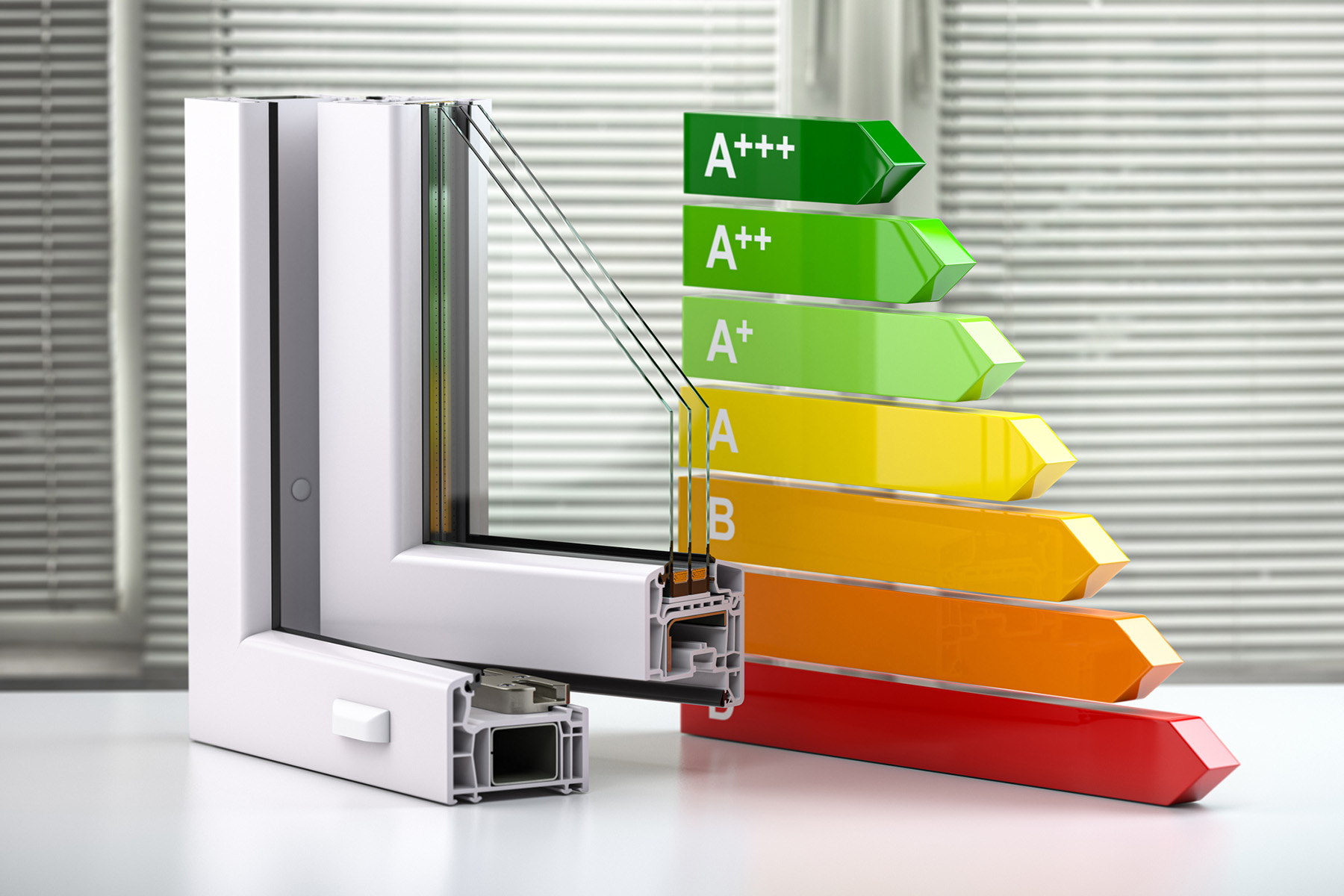
Choosing the right type of energy-efficient windows is one of the most impactful decisions a homeowner can make to help their home more eco-friendly and save money on their energy bills. The highest-quality energy-saving windows absorb thermal solar energy in the winter months and prevent UV rays from overheating a home in summer months.
Choosing energy-efficient windows might seem like a confusing process, but this guide is here to help explain how energy-efficient windows work and how to choose the best set for your home.
What Are Energy Efficient Windows?
Energy-efficient windows help reduce energy bills by keeping the temperature consistent inside the home. These windows are designed with a thermal break that retains thermal heat from solar energy in cold months but also minimizes solar heat during warm months. Energy-efficient windows keep heat from the HVAC insulated in the winter, and also keep cool air from the AC inside in the warmer summer months.
A report by Energy.gov shows that heat gain or loss can account for about 25-30% of residential heating and cooling energy costs. There are two primary examples of this:
- In the summer, with regular windows, the solar energy is transferred through the glass, heating the house. The air conditioner then needs to run longer to cool the home.
- Because of the laws of thermodynamics, hotter air moves towards colder air, and poorly insulated windows allow this heat to escape through windows in colder winter months. The furnace needs to run for longer to get the home warm.
Energy-efficient windows prevent heat loss when it’s cold and traps cold air from the AC when it’s warm, making heating and cooling more efficient.
Tips for Choosing Energy Efficient Windows
There are certain features you should look for when selecting energy-efficient windows for your home:
- Multiple panes of glass: Single-pane windows are the least insulated type of window. Double-pane and triple-pane windows are increasingly energy efficient with each pane of glass. Quadruple-pane windows exist, but the energy-efficiency is only negligibly better than triple-pane glass.
- Low-E glass coating: Low-E (‘low-emissive’) glass has tine metallic coating inside the glass, which reflects heat in the summer, and holds in heat in the winter. For temperate Mediterranean climates, this type of window is a great choice.
- Gas fills: In-between the panes of glass, window manufacturers often put inert non-toxic gases like argon or krypton gas. These are dense, non-reactive gases which help improve window insulation.
- Weatherstripping: Seals around the windows must be tight, with high-quality weatherstripping keeping everything airtight, with air drafts eliminated. Gaps or drafts can impact your energy bills as hot or cool air can leak if these seals are not professionally done.
- Warm edge spacers: Spacers help form a seal around the panes of glass where they touch the window panes, they help minimize heart transfer.
How Do Energy Efficient Windows Work?
Energy-efficient windows use double or triple panes with inert insulating gases in between the panes, which helps reduce heat transfer. On each window pane, there is also a low-emissive coatings (Low-E), made from a microscopic thin layer which allows sunlight through but reflects radiant heat back. When weather is cold, the low-E coatings reflect the heat back inside, or in warmer months, reflects the heat back outside.
Passive low-E coatings maximize solar heat gain, reducing reliance on central heating. Solar control coatings reduce solar thermal energy entering the building, ensuring the building uses air conditioning.
Other elements in the design of the window, such as warm edge spacers, which reduce heat transfer at the window edges, help create an energy-efficient window which reduces use of heating and cooling.
How Much Money Can You Expect to Save on Energy Bills?
According to a report by the U.S. Department of Energy windows are responsible for 25% to 30% of heat loss and heat gain in the home.
Single pane windows have less insulating glass and perform poorly at insulating heat or cold within the house, compared to double or triple paned energy-efficient windows.
ENERGY STAR estimates that replacing single-pane windows can save between $101 and $583 annually. Replacing double-pane windows with clear glass will save you an estimated $27 to $197 annually. The exact amount of savings can vary based on local energy rates, climate and weather, and the overall square feet of your home.
FAQ
What type of window is the least energy efficient?
Single-pane windows are considered the least energy efficient type of windows. There are no thermal breaks and allow warm or cooled interior air to escape while allowing outside air inside.
What type of window is best for energy efficiency?
Triple-pane windows, filled with an inert gas like krypton or argon gas, are the most energy-efficient. These windows have two thermal breaks, and the gases help prevent heat transfer so there is ample insulation.
Get Professional Home Remodeling in Sacramento and Roseville
If you need help with window installation, home remodeling, kitchen remodeling or any other renovations, call Sacramento Remodeling Group at (916) 862-1444 . We have decades of experience helping homeowners and property owners building luxurious homes and designing beautiful, functional living spaces.
Sacramento Remodeing Group is a fully licensed and bonded general contractor in the Placer County and Sacramento region. We can take care of all of your home renovation and remodeling needs. Contact us for a free consultation today.